Most people who walk into a head spa for the first time walk in expecting something like a salon appointment with extra steps. A shampoo, maybe a scalp scrub, a blow-dry. Something that happens to your hair.
Most people who walk out have no words for what just happened to them.
A head spa is not a hair appointment. It is not a scalp treatment in the clinical sense. And it is certainly not something you can approximate at home with a good conditioner and a YouTube tutorial. It is a ritual one that works on your nervous system as much as it works on your scalp and once you understand what it actually involves, the difference from a regular salon becomes impossible to ignore.
Here is what a head spa really is, where it comes from, and why it has quietly become one of the most sought-after wellness experiences in Bangkok.
The honest answer: what a head spa actually is
A head spa is a structured relaxation ritual centred on the scalp, neck, and hair typically combining massage, water therapy, steam, and carefully chosen products in a sequence designed to move you through distinct states of relaxation. The key word is ritual. Not appointment. Not service. A ritual has a shape, an intention, and an arc. You enter one state and leave another.
The scalp is the focus because it is where the body holds an extraordinary amount of tension that most people have stopped noticing. The muscles beneath the scalp the temporalis, the frontalis, the occipitalis- tighten in response to stress, screen exposure, poor posture, and the kind of low-grade vigilance that defines modern city life. Most of us carry years of that tension without a single therapist ever touching it.
A head spa addresses that. But the best ones go further layering in sensory elements like water sounds, controlled temperature, organic products, and rhythmic touch that together signal to the nervous system that it is genuinely safe to stop. That is the transition that first-timers describe as life-changing. Not the clean hair. Not the refreshed scalp. The feeling of having actually stopped, sometimes for the first time in months.
Where it comes from: Japan, Korea, Vietnam and the differences that matter
The head spa as a formalised ritual originated in Japan, where it evolved from traditional tou spa (頭スパ) practices into the highly structured, technology-assisted experiences that Japanese salons became known for scalp microscopes, carbonated water rinses, precision scalp analysis before and after each session. Japanese-style head spas are meticulous and data-driven. They appeal to people who want to understand exactly what is happening to their scalp.
Korean head spas followed a similar route, with a stronger emphasis on skin-adjacent concepts- the scalp as an extension of the face, worthy of the same rigorous care. Korean-influenced head spas often incorporate ingredients and textures borrowed from the K-beauty world: fermented extracts, intensive moisture treatments, ceramic heat tools.
Vietnamese head spas take a different path. They are slower, more sensory, and more deeply rooted in the idea of restoration through touch and water. Vietnamese technique emphasises the therapeutic rhythm of scalp massage- pressure, release, circulation, warmth- over diagnostic technology. The goal is not assessment. The goal is surrender. Water plays a central role: the sound of it, the temperature of it, the way it moves over the scalp in a slow, deliberate pour. The experience is designed to blur the line between wakefulness and sleep, and it does so with remarkable consistency.
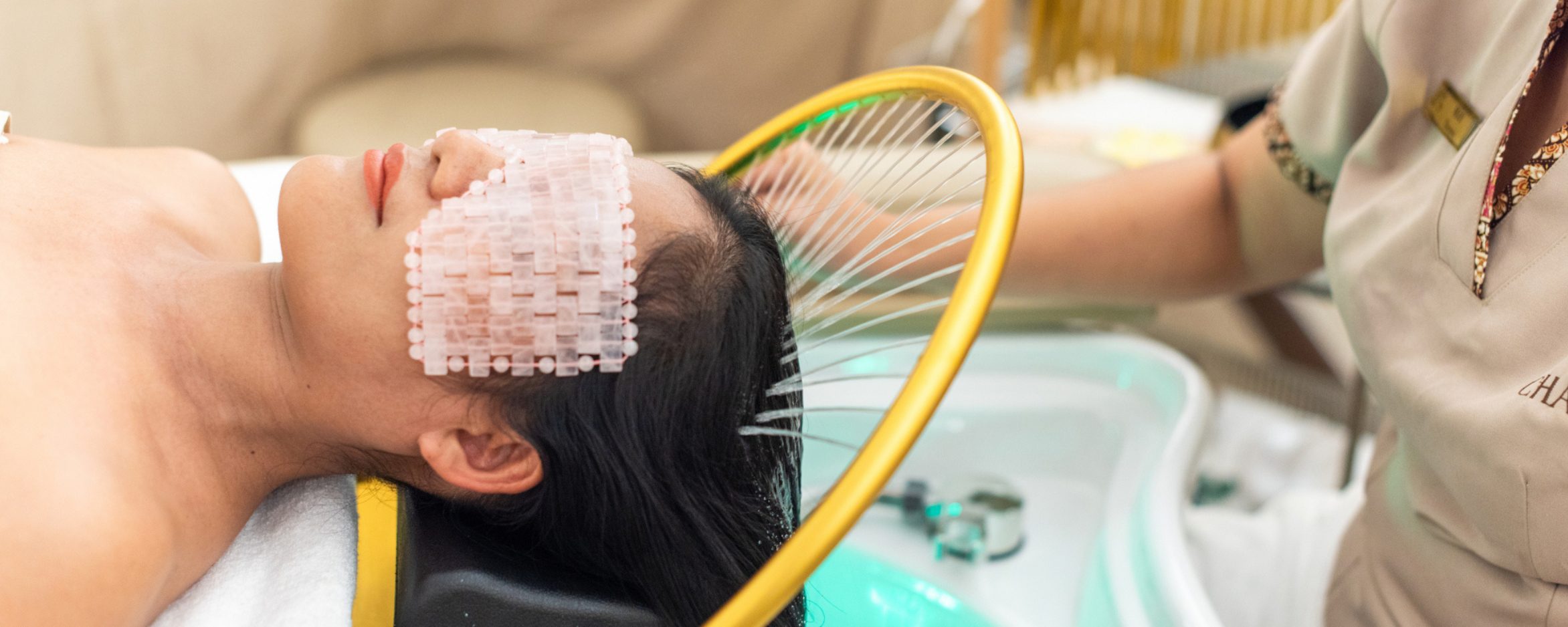
At Chandee, the foundation is Vietnamese refined and deepened through years of Thai massage knowledge and a genuine obsession with the sensory experience of the guest. What emerged is the 17-step Ring of Water ritual, a sequence that moves through scalp massage, ASMR water sounds, steam, organic product application, a full hair wash, and a gentle drying each step building on the last, each one pulling you a little further from wherever you were when you arrived.
What actually happens during a head spa session
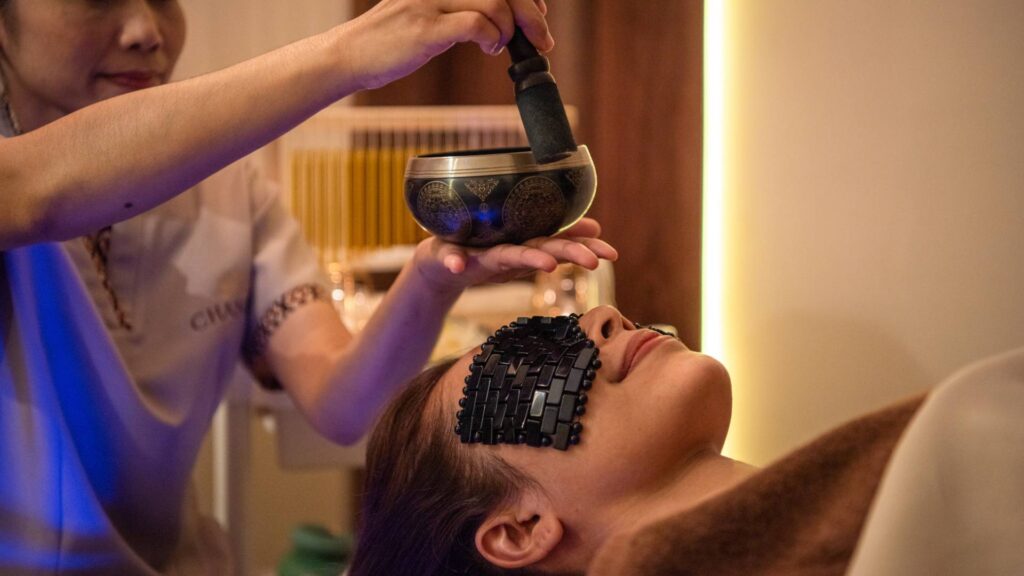
The specifics vary by venue, but a properly constructed head spa session moves through several distinct phases. At Chandee, the full Ring of Water ritual unfolds across seventeen steps but the underlying arc is consistent and worth understanding before your first visit.
It begins with a consultation and scalp assessment: not with a microscope, but with observation and conversation. The therapist is reading your scalp, your posture, your state of tension. Then come the massage phases dry scalp massage first, working the pressure points across the head, temples, and base of the skull where stress pools most reliably. Research published in the Journal of Physical Therapy Science found that regular scalp massage measurably reduced cortisol levels and lowered both blood pressure and heart rate in healthy participants. The body responds to this kind of touch in ways that are physiological, not imaginary.
The water phase follows and this is where a Vietnamese-style head spa distinguishes itself most clearly. Warm water is introduced in a slow, controlled pour that activates something very specific in the nervous system. The sound of water alone has a documented effect: a 2025 study in Neuroscience of Consciousness found that ASMR content activates the parasympathetic nervous system more effectively than nature sounds or music slowing the heart rate, deepening the breath, shifting the body out of fight-or-flight. At Chandee, ASMR ambient sound is layered through the entire ritual. The effect is cumulative.
The middle of the session introduces steam, product application at Chandee, organic Yves Rocher shampoo and conditioning products are used exclusively in the head spa ritual and a sustained period of what can only be described as floating. Guests who have never slept during a massage often sleep here. The final phases move through a full hair wash, gentle drying, and a closing neck and shoulder sequence that grounds you back in the room before you leave.
From start to finish, a full head spa session at Chandee takes 60 to 90 minutes. Most guests describe the re-entry to Bangkok’s streets as jarring in the best possible way.
How a head spa differs from a regular salon: the full picture
The easiest way to understand the difference is to think about what each experience is optimised for.
A regular hair salon is optimised for your hair’s appearance. The goal is a specific visual outcome a cut, a colour, a style. The experience of being in the chair is incidental. Some salons make it pleasant; others do not particularly try. But in either case, the chair, the mirrors, the noise, the chemical smells, the conversation these are the context, not the point.
A head spa is optimised for your nervous system. The goal is a specific internal outcome genuine relaxation, cortisol reduction, the restoration of something that accumulated stress has depleted. Everything in a well-designed head spa the lighting, the sound, the temperature, the sequence of touch, the products is chosen in service of that goal. The hair is better afterwards, yes. But that is a byproduct, not the destination.
The practical differences flow from that distinction:
- You recline, not sit upright. Most head spa rituals are performed with the guest horizontal or in a deep recline the position the body associates with sleep and safety, not the forward-facing alertness of a salon chair.
- The room is quiet, or deliberately sound-designed. No blow-dryers running three chairs away. No ambient noise left unmanaged. At Chandee, the ASMR soundscape is part of the ritual itself.
- The therapist’s training is different. Head spa therapists work with the muscles beneath the scalp and down the neck this is closer to massage therapy than cosmetology. The pressure points, the release sequences, the reading of tension these require a different set of hands than cutting or colouring.
- There is no mirrors, no performance. A regular salon is partly a social performance you watch your reflection, you manage the conversation, you assess the result in real time. A head spa asks you to let go of all of that. The eyes close. The mind follows.
- The products serve the experience, not the style. At Chandee, every product in the head spa ritual is organic and chosen for sensory resonance as much as efficacy. There is no hairspray. There is no setting product. There is warm water, clean ingredients, and the scent of something that belongs.
If you are thinking about whether a head spa or a traditional massage is better for your particular kind of tiredness, the answer depends on where you carry it. If it is in your back and legs, start with an aroma oil massage or traditional Thai massage. If it is in your head the weight behind your eyes, the tension in your temples, the low hum of a mind that will not stop a head spa is the more precise answer.
Who should try a head spa (and who should not wait)
Head spas are for almost everyone. The experience is gentle by design, and the pressure is always adjusted to the guest. First-timers tend to be surprised by how accessible it is there is nothing to prepare for, nothing to endure. You arrive, you lie down, and the ritual takes care of the rest.
That said, a few groups find the head spa particularly transformative:
- Travellers experiencing jet lag, disrupted sleep, or the accumulated stress of extended trips
- Anyone whose tension lives predominantly in the head, neck, and shoulders for office workers, frequent flyers, people who stare at screens for a living
- Guests who have tried standard massage before and found it relaxing but not quite enough
- Couples looking for a shared experience that goes beyond a typical spa day Chandee’s couple head spa options are designed for exactly this
If you have recently coloured, bleached, or chemically processed your hair, it is worth waiting 48 to 72 hours before your head spa session. This is Chandee’s standard recommendation, and it applies regardless of product quality. The scalp benefits from a little recovery time after chemical exposure before a water-based ritual. For more detail on this, the full guide to head spas for colour-treated hair covers everything you need to know.
For most guests, the real question is not whether to try a head spa. It is how often. If you are curious about the answer, this article on head spa frequency breaks it down honestly by lifestyle, by hair type, and by what you are actually trying to restore.

What to expect at Chandee specifically
Chandee is Bangkok’s original Vietnamese Head Spa and Sleep Salon the only place in the city that pairs the full head spa ritual with authentic Thai massage therapy and facial treatments under one roof, open until 11 PM. The Silom location on Naradhiwas Rajanagarindra Road sits a short walk from BTS Chong Nonsi and the King Power Mahanakhon Tower and a second location in Sukhumvit 39, near BTS Phrom Phong and EmQuartier.
The centrepiece of every Chandee head spa experience is the 17-step Ring of Water ritual , a Vietnamese-origin sequence that has been refined over years into something that guests consistently describe as unlike anything else they have experienced in Bangkok, or anywhere else. The hand-painted starry ceiling overhead, the ASMR soundscape, the organic products, the unhurried hands of a therapist who has done this a thousand times and still brings full attention to each session, these are not marketing details. They are what people remember when they get home and start recommending Chandee to their friends.
The benefits of a head spa are real and documented. But the experience of one is something that no article including this one can fully convey. At some point, you simply have to lie down under the stars and let the water do the rest.
If you are in Bangkok and want to experience what a head spa actually feels like rather than just reading about it, our guide to the best head spa in Bangkok covers everything from what to expect on arrival to which treatment to choose for your first visit. Still have questions? Our head spa FAQ covers the most common ones, from how long sessions last to whether you need to wash your hair beforehand.
Book your session at chandee.com, or walk in any day between 10 AM and 11 PM.