The real story is older, messier, and more interesting than the trend suggests.
If you have spent any time looking up head spas online – whether you found Chandee through TikTok, Google Maps, or a friend’s recommendation – you have probably noticed something odd. Everyone seems to have a different answer to the question of where head spas actually come from.
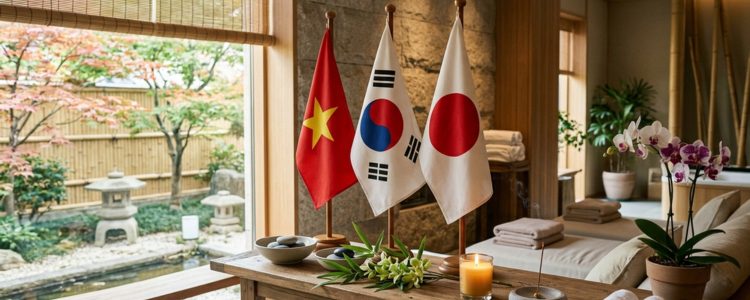
Some listings call it a Japanese experience. Others market it as Korean. Chandee describes its signature ritual as Vietnamese. All three claims exist simultaneously, and none of them are exactly wrong – which is what makes this question genuinely worth exploring.
The truth is that scalp care and head massage have independent roots in multiple Asian cultures, each developing distinct techniques for distinct reasons. What we now call a “head spa” is not one thing that spread outward from a single origin point. It is several things, from several places, that converged into a global phenomenon at roughly the same moment.
Here is how those strands actually developed – and why the distinction matters when you are choosing where to go.
Japan: Where the Modern Head Spa Format Was Defined
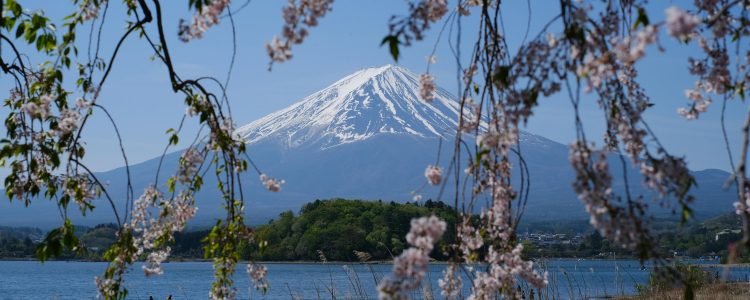
When people describe a head spa in a contemporary salon context – a reclined chair, a dedicated shampoo station, warm water flowing over the scalp, a therapist working methodically through pressure points – that specific format is Japanese in origin.
The concept grew out of Japan’s hair salon culture in the late 1990s and early 2000s. Japanese salons had long been known for their meticulous approach to the shampoo and scalp stage of a haircut – a step that in most Western countries lasted about ninety seconds. Japanese clients expected something more considered. The scalp was understood as the foundation of hair health, and the shampoo chair became a place of genuine care rather than functional preparation.
From there, dedicated scalp rituals began to emerge as standalone services rather than precursors to a haircut. Japanese brands developed specialist scalp formulations. The idea of a “head spa” as an independent appointment – not tied to any haircut or styling – began to solidify around the early 2000s. By the time it spread internationally through social media, Japan had effectively defined the vocabulary: the reclined position, the warm water, the pressure work, the medicated or botanical products applied directly to the scalp.
The Japanese version tends to be precise and methodical. Carbonated water treatments, microscopic scalp analysis, and clinical-grade botanical formulas are common at high-end Japanese head spas. It is the tradition most associated with scalp health as a technical concern – and the one that gave the format its current name.
Korea: Herbal Tradition Meets Modern Skincare Philosophy
Korea’s relationship with scalp care runs through a completely different cultural channel – one rooted in traditional herbal medicine and the country’s deep investment in skin health.
In Korean traditional medicine (hanbang), the scalp is considered an extension of the face – equally deserving of care, equally responsive to what is applied to it. Herbal scalp preparations using ingredients like mugwort, ginseng, and camellia have been used for centuries. Head massage was practised both for relaxation and as part of broader therapeutic traditions focused on energy flow and circulation.
The modern Korean head spa, as it became visible internationally, reflects the country’s beauty industry strengths: innovative formulations, multi-step protocols, and a skincare-first philosophy applied to the scalp. Korean head spas often incorporate ingredients drawn from the K-beauty canon – fermented essences, peptides, centella asiatica – reframed for scalp application. The experience tends to emphasise product quality and skin science alongside the physical ritual.
Korea’s version of the head spa became globally visible partly through the same wave of cultural influence that brought K-beauty, K-pop, and Korean skincare routines to international attention. When younger audiences in the West started paying more attention to scalp health, the Korean framework – familiar, scientific-sounding, aesthetically polished – gave them a vocabulary they recognised.
Vietnam: The Oldest Continuous Tradition, and the Least Documented
The Vietnamese tradition is different in almost every way. Less formalized in the way of salon protocols, less visible in international marketing, and considerably older in its roots – it is also, for many guests who experience it properly, the most viscerally moving.
Head washing and scalp massage in Vietnamese culture traces back to community life in rural and semi-rural settings. It was practised along rivers and waterways, using natural ingredients – herbs, rice water, local botanicals – and performed as an act of care within families and between close friends. The water itself was central, not incidental. The sound of water, the temperature, the way it moved across the scalp – these were part of the experience, not merely functional elements of rinsing out product.
The Vietnamese approach also developed as deeply connected to touch, rhythm, and duration. Where the Japanese tradition refined the technique and the Korean tradition refined the product, the Vietnamese tradition refined the feeling. The goal was not primarily scalp health or hair quality, though both were valued. The goal was deep rest – the kind of rest that comes when someone you trust is caring for you without urgency, without a schedule, without anything being asked of you in return.
This is why the Vietnamese head spa experience translates so naturally into a sleep-inducing ritual. The ASMR quality that guests at Chandee consistently describe – the drift, the sense of the mind quieting, the feeling of waking somewhere warmer than where you started – is not an added feature. It is the original intention of the tradition.
Research into scalp massage more broadly has confirmed what Vietnamese practice understood intuitively: consistent, skilled scalp manipulation increases local blood flow, reduces markers of physiological stress, and can influence hair follicle behaviour over time. A 2016 study published in PMC found that standardised scalp massage led to measurable increases in hair thickness – outcomes that align with traditions built on exactly this kind of sustained, attentive scalp work. You can read more about the connection between scalp care and stress in our article on stress, hair loss, and what a head spa actually does for both.
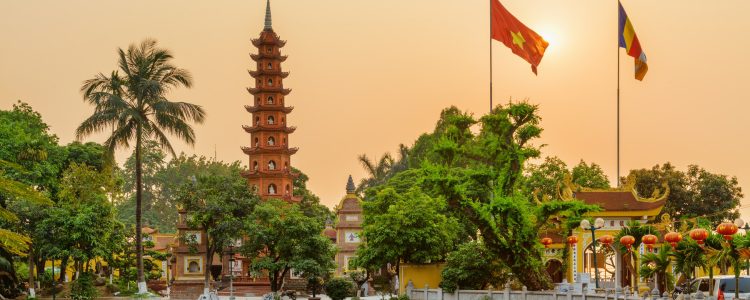
So Why Does Everyone Claim the Head Spa as Their Own?
Because, in a meaningful sense, they all can.
Scalp care and head massage are not uniquely Asian practices either – Indian Ayurvedic tradition has practised champi (head massage) for over two thousand years, using warm oils and specific pressure techniques that influenced much of what spread westward through British colonialism and eventually became “Indian head massage” in Western wellness spaces. The impulse to care for the head, to treat the scalp as a site of both health and rest, is human and ancient across dozens of cultures.
What distinguishes the Japanese, Korean, and Vietnamese traditions is not priority of invention but specificity of form. Each developed a distinct version of the experience, shaped by different cultural values, different available ingredients, and different ideas about what relaxation is supposed to accomplish.
The Japanese version asks: what is optimally healthy for the scalp?
The Korean version asks: what can we apply that will make a measurable difference?
The Vietnamese version asks: how does this person need to feel when they leave?
All three are legitimate frameworks. The best head spa experiences draw from more than one.
What Makes Chandee’s Ritual Vietnamese and Why It Matters
When Chandee describes its signature experience as a Vietnamese Head Spa, the claim is not purely marketing. The 17-step Ring of Water ritual was developed from Vietnamese technique – specifically the tradition of water-centred, touch-first, rest-oriented scalp and hair care that has been practised in Vietnam for generations.
What Chandee has done is bring that tradition into a Bangkok context and refine it with the complementary knowledge of Thai massage therapy – a tradition equally committed to the body as a whole system, equally rooted in the relationship between touch and healing. The result is something that carries the emotional DNA of the Vietnamese approach – the water sounds, the unhurried rhythm, the quality of full surrender – while being supported by the structural understanding of Thai bodywork.
The organic Yves Rocher shampoo and scalp products used in the ritual add a third layer: contemporary botanical formulation applied with the care of an older tradition. None of these elements are in tension. They reinforce each other.
If you are curious about what the full ritual actually involves, our guide to what a head spa is and what to expect walks through the experience step by step – including what happens to most guests somewhere around step nine.
Which Tradition Is Right for You?
The honest answer depends on what you are actually looking for.
If your primary concern is scalp diagnosis – understanding exactly what is happening with your hair, getting clinical data, addressing a specific condition – a Japanese-style head spa with scalp analysis tools may serve you best. Bangkok has excellent options in this category, including Head Onsen, which uses microscopic scalp assessment as a central part of the experience.
If you are drawn to skincare innovation and want the most botanically sophisticated formulations applied to your scalp, Korean-influenced services offer exactly that.
If what you need is to stop – fully, genuinely, in a way that reaches the nervous system rather than just the muscles – then the Vietnamese tradition, properly practised, does something the other two do not prioritise. It is designed not to improve your scalp data but to return you to yourself.
In Bangkok, that experience is available at Chandee. The head spa and full-body massage combinations extend the ritual across the entire body, taking the Vietnamese philosophy of unhurried care and letting it spread from the scalp downward. Guests who add a Gua Sha or V-Shape facial to their session often describe the combination as the first time they have genuinely rested in months.
That is not hyperbole. That is the tradition working as it was always intended to.
The Trend Is New. The Tradition Is Not.
Head spas are having a cultural moment – TikTok videos of scalp rituals accumulate millions of views, boutique head spa studios are opening in cities that had none two years ago, and “head spa near me” has become one of the fastest-growing wellness search terms globally.
But the thing that makes a head spa genuinely restorative has nothing to do with the trend. It has to do with the fact that human beings have understood, across cultures and centuries and very different circumstances, that the scalp is where a great deal of accumulated tension lives – and that skilled, attentive care directed there reaches something in the body that other kinds of rest simply do not.
Japan codified it. Korea innovated it. Vietnam felt it deeply and built something quiet and ancient around that feeling.
All three deserve credit. If you are in Bangkok and want to experience the Vietnamese tradition specifically, Chandee’s 17-step Ring of Water ritual is the most authentic and complete version currently available in the city.
Reserve your session at chandee.com – or walk in any evening until 11 PM at 60 Naradhiwas Rajanagarindra Road, Silom.
A second location opens in Sukhumvit 39, near BTS Phrom Phong and EmQuartier, in April 2026.
Chandee Sleep Salon & Massage – Bangkok’s original Vietnamese Head Spa & Sleep Salon. The name means “I feel good.”