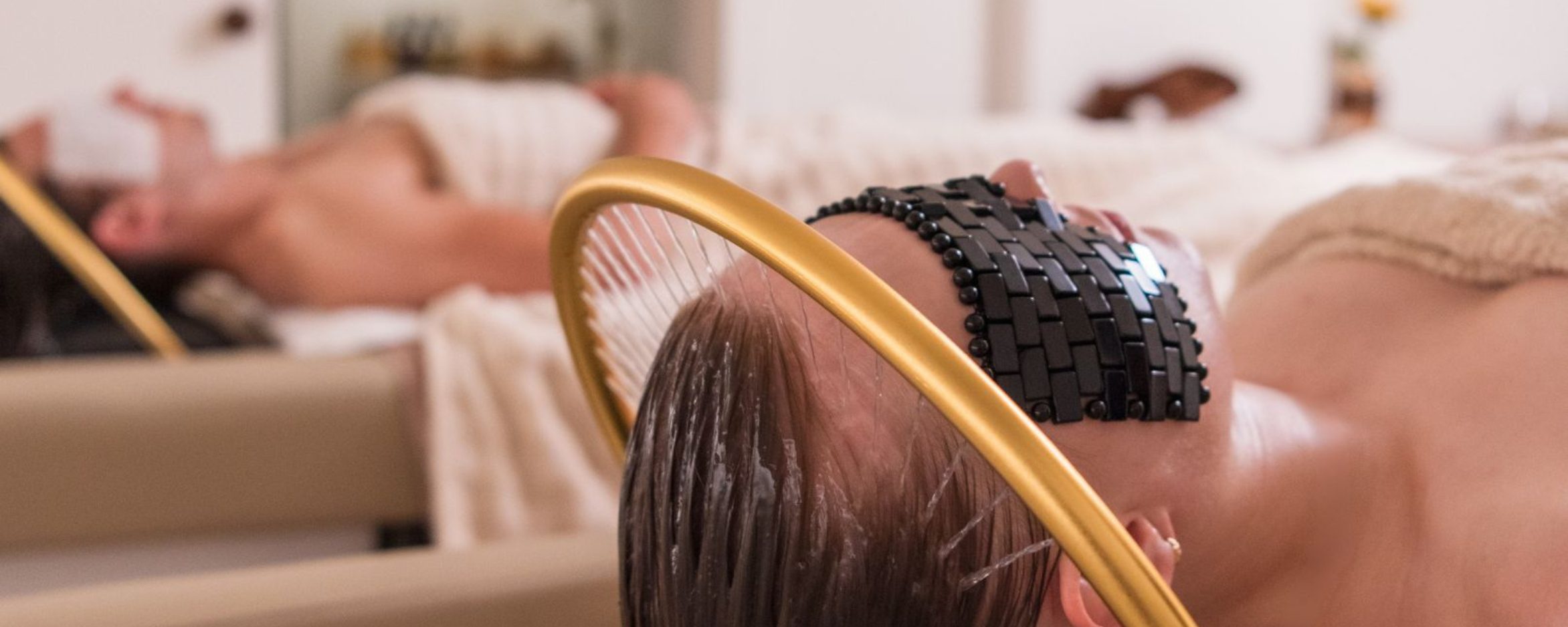
It usually happens somewhere around the third step of the head spa ritual.
The room is dim. There’s a faint scent of organic botanicals in the air. And then water. Warm, steady, falling gently over your scalp. And with it, a sound so specific, so soft, that something in your nervous system just… releases.
If you’ve ever had that experience, that sudden, involuntary sense of calm that washes over you when someone whispers near you, turns the pages of a book, or pours water close to your ears & you’ve experienced ASMR. And no, you’re not imagining it. The science is catching up, and it’s genuinely fascinating.
At Chandee, we didn’t set out to build an “ASMR experience.” We set out to build the deepest relaxation available in Bangkok. It turned out those two things were the same.
What ASMR Actually Is (Not What You Think)
ASMR stands for Autonomous Sensory Meridian Response, a term coined by a web community in 2010 to describe something millions of people had felt their entire lives but never had a name for. That pleasant, tingling sensation that starts at the scalp and flows down the neck and spine in response to certain gentle sounds or touches.
It’s been called “brain tingles,” “head orgasms” (a term its proponents mostly regret), and more helpfully a “relaxation response.” Researchers at the University of Sheffield found that people who experience ASMR showed significant reductions in heart rate while watching ASMR videos – comparable to the effect of mindfulness meditation. Another study published in PLOS One found that ASMR triggers produced increased feelings of social connection, calmness, and reduced sadness.
Not everyone experiences ASMR in the same way. Some people feel the physical tingle strongly; others simply feel a profound, spreading calm. But the underlying mechanism, slow, gentle, predictable stimulation of the auditory and tactile nervous system, appears to work on most people to some degree, whether or not they feel the “classic” sensation.
The triggers most consistently reported? Whispering. Tapping. Crinkling. And above everything else: the sound of water.
Why Water Is the Most Powerful ASMR Trigger of All
There’s a reason the head spa at Chandee is built around water – and it goes deeper than just the practicalities of washing hair.
Evolutionary psychologists have theorised that humans have an innate, deep-rooted response to the sound of gentle, flowing water. For our ancestors, the sound of a calm stream meant safety – no predators, a stable environment, a place to rest. The brain essentially learned to associate that sound with the permission to lower its guard.
That response didn’t disappear when we moved into cities. It’s still there, sitting beneath the noise of Bangkok traffic and office meetings and phone notifications. And when you hear water – close, warm, unhurried – the nervous system responds as it always has. The heart rate drops. The shoulders release. The mind stops composing its to-do list.
This is the exact reason our our 17-step Ring of Water ritual, which we explain in detail in our head spa guide, is structured the way it is. The water element isn’t decorative. It isn’t a hair-washing step that happens to be included. It is the centrepiece – the moment the body crosses over from alert to deeply, genuinely relaxed.
The Connection Between ASMR and Sleep
ASMR content on YouTube has billions of views, and the majority of people watching it report one primary use: falling asleep.
That’s not coincidence. The neurological state that ASMR induces – sometimes described as “hypnagogic” closely mirrors the transition between wakefulness and sleep. Brainwave activity slows. Muscle tension decreases. The internal monologue quietens. The body moves, gently but unmistakably, toward rest.
For travellers and city-dwellers, this matters enormously. Modern life keeps the nervous system in a near-constant state of low-level activation. Screens. Noise. Pace. The sympathetic nervous system (the “fight or flight” branch) gets a near-permanent workout, while the parasympathetic system (the “rest and digest” branch, the one responsible for sleep and recovery) barely gets a look-in.
ASMR-based experiences offer something rare: a direct, fast pathway to parasympathetic activation. Not through effort or technique, but through sensation.
Many guests at Chandee fall asleep during their session. Genuinely, fully asleep often within the first 20 minutes of the head spa ritual. That’s not a side effect. That’s the point.
The Starry Ceiling: Why It’s Not Just a Gimmick
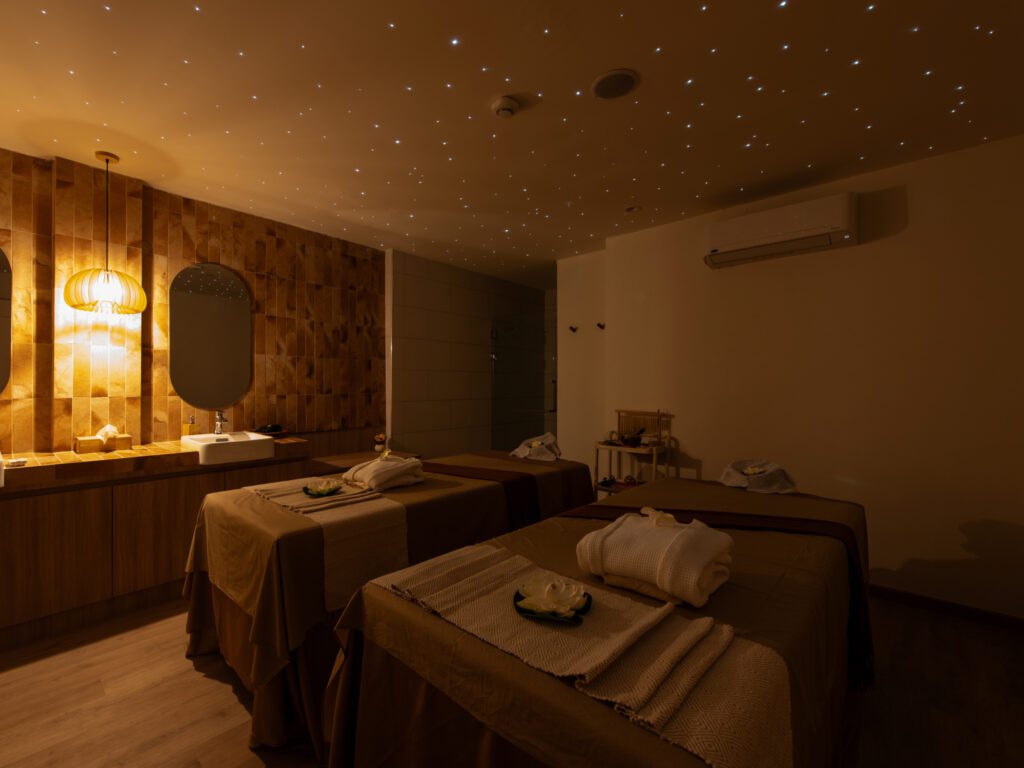
The hand-painted starry ceiling above our treatment beds is probably the single most photographed feature at Chandee. Guests mention it in reviews constantly. It ends up on TikTok. It’s become, unexpectedly, something of an icon.
But it wasn’t designed for Instagram. It was designed for the mind.
Visual stimuli play a significant role in regulating the nervous system. Darkness or very dim light signals the brain to begin melatonin production – the hormone that initiates sleep. Starfields, specifically, have been used in sleep environments for decades. There’s something about the pattern – scattered, soft, infinite – that the visual cortex seems to find genuinely restful. It provides just enough gentle stimulation to prevent the mind from grasping for distraction, while not being demanding enough to keep you awake.
When you’re lying back under the ceiling, warm water beginning its work on your scalp, the sound of the ritual surrounding you – your brain receives a coherent signal from every channel. Eyes: rest. Ears: rest. Skin: warmth and care. The combined effect is something that individual components can’t replicate alone.
That layering of signals is why a Chandee head spa session produces a depth of relaxation that surprises most people the first time they experience it. Guests who’ve had head spas elsewhere often notice the difference immediately – the complete sensory environment changes what the experience is capable of.
What Happens to the Body During a Deep ASMR Response
Beyond the subjective feeling, the physiological response is measurable. During a well-induced ASMR or deep relaxation state, research has documented:
- Heart rate reduction of 3-5 beats per minute on average comparable to the effect of slow breathing exercises
- Skin conductance changes consistent with reduced stress and emotional regulation
- Increased oxytocin (the “bonding” hormone) – which may explain the sense of safety and warmth that accompanies the experience
- Reduced activity in the prefrontal cortex – the part of the brain most associated with overthinking, planning, and anxiety
That last one is particularly interesting for anyone who’s ever lain in bed unable to switch their brain off. The prefrontal cortex – brilliant when you need it, exhausting when you don’t – requires active signalling to stand down. ASMR, gentle touch, and sensory immersion provide exactly those signals.
It’s also worth noting the role of scalp massage specifically. The scalp is densely packed with nerve endings, and gentle, rhythmic stimulation activates the vagus nerve – one of the primary pathways of the parasympathetic nervous system. Vagal activation is directly associated with slower heart rate, lower blood pressure, reduced cortisol, and improved sleep onset.
This is part of what makes the head spa such an unexpectedly powerful wellness tool. It isn’t acting on the surface of the body. It’s working on the nervous system directly.
You can read more about the full ritual and what to expect in our guide to what a head spa actually is – it’s one of the most common questions we get from first-time visitors.
Sleep-Deprived Bangkok: Why This Matters Here
Bangkok is one of the most stimulating cities on earth. That’s part of its magic. It’s also part of why so many visitors arrive already depleted and find themselves even more exhausted by the pace of experiencing the city.
Tourism research consistently shows that travellers sleep worse in hotel rooms, even good ones, for the first several nights of a trip. The unfamiliar environment, the time zone shifts, the excitement all of it keeps the nervous system slightly elevated, even when the body is tired.
For the significant number of Chandee guests who visit Bangkok specifically for experiences rather than business, the head spa functions, in part, as a sleep reset. Not a medical intervention – just a deeply effective sensory signal to the nervous system that it’s safe to let go.
It’s one reason so many guests find themselves returning two or three times during a single Bangkok trip. The first session introduces the experience. The second is when full trust sets in. By the third, guests often tell us they sleep better in Bangkok than they do at home.
Bangkok’s environment also has specific effects on the scalp and hair that are worth understanding – if you’re curious about what the climate here actually does to your hair, our piece on hair loss and Bangkok’s unique environment covers this in detail.
How Chandee Built ASMR Into the Architecture of Each Session
The ASMR elements at Chandee aren’t a feature that was added on top of an existing service. They’re built into the structure of how each session is sequenced and delivered.
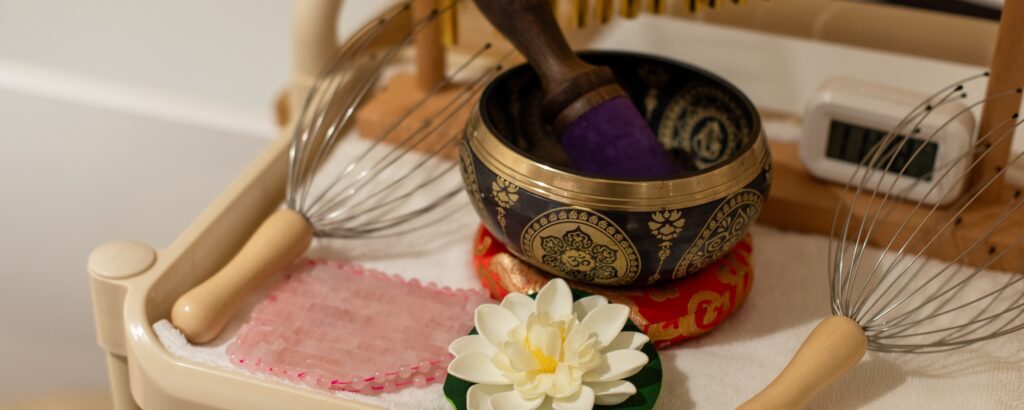
The water sounds come from the ritual itself. The specific technique of our Ring of Water ritual creates a consistent, close, enveloping sound environment. The pacing is deliberate: movements are slow, transitions are gentle, and there are no sudden changes in pressure or temperature. The products, particularly the Yves Rocher organic formulas used in the head spa are chosen in part for their scent profiles, which lean toward botanical and calming rather than sharp or medicinal.
The lighting, the ceiling, the sound + none of it is accidental. It’s a designed environment, built around a single outcome: the deepest possible rest.
For guests who also add an aroma oil massage to their session, the ASMR response typically deepens further. The warm oil, the sustained rhythm of massage, and the continued water sounds create a compounding effect that many guests describe as “better than sleep.” If you haven’t explored that combination yet, our guide to aroma oil massage in Bangkok is a good place to start.
A Note on the Science (and Its Limits)
It’s worth being honest: ASMR research is still relatively young. Most studies have small sample sizes. Not all people experience the tingle response, and the mechanisms aren’t fully understood. We’re not making medical claims here, and Chandee is not a clinical sleep centre.
What we are is a place that has watched, session after session, as guests arrive tense and leave genuinely calm often having fallen asleep in the chair. The feedback is consistent enough, across hundreds of guests from dozens of countries, that something real is happening. Science is catching up to what the experience demonstrates.
If you’re someone who struggles to switch off in Bangkok or anywhere, a head spa session at Chandee is worth trying before you try anything more complicated. The ritual is ancient. The science is modern. The ceiling is hand-painted. And we’re open until 11 PM.
Some things don’t need to be overthought.
It is no coincidence that guests consistently describe Chandee as the best head spa in Bangkok for sleep and stress recovery. The starry ceiling, the water sounds, the sequence – none of it is accidental.
Ready to experience it? Chandee Sleep Salon is located in Silom, a short walk from BTS Chong Nonsi, near Mahanakhon Tower. Open daily, 10:00 AM – 11:00 PM. Our second location already opened in Sukhumvit 39 (near BTS Phrom Phong and EmQuartier).
Reserve your session at chandee.com/book – or walk in and ask what we’d recommend for your first visit.