
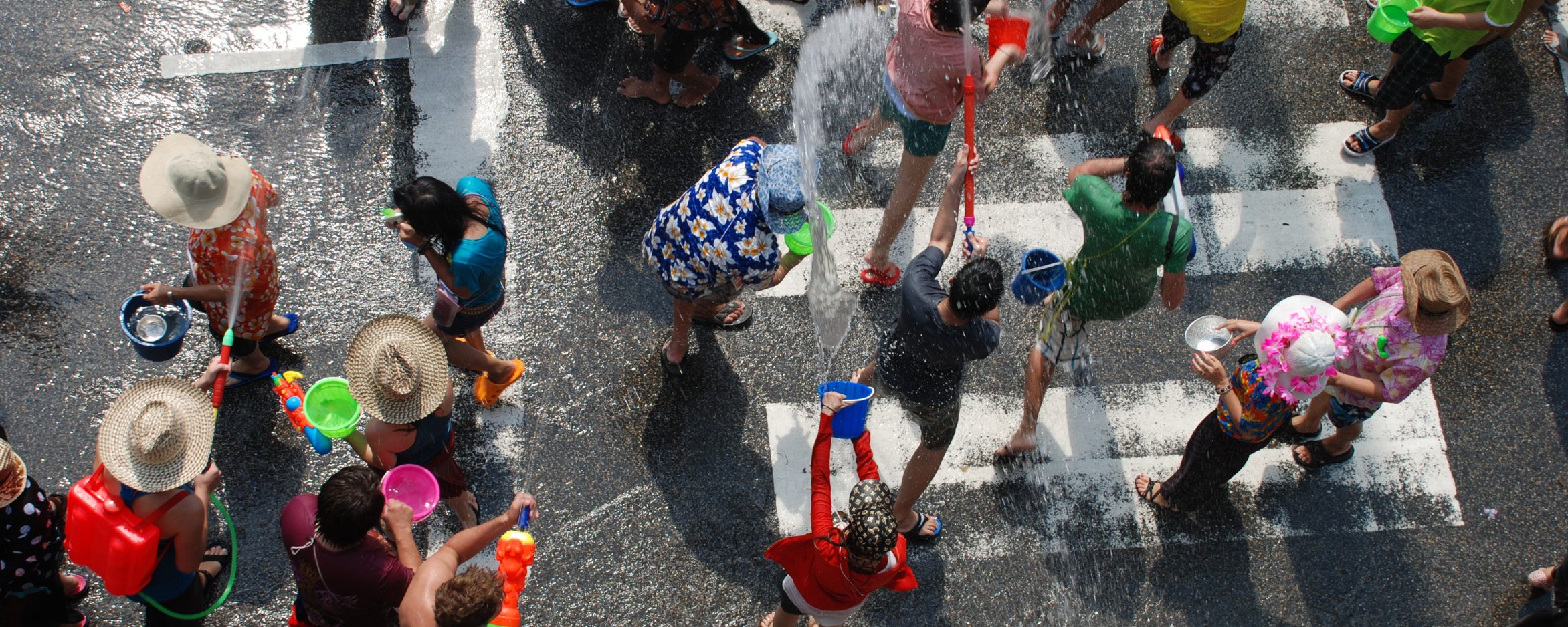
Every April, Bangkok transforms. Streets that are normally devoted to traffic become rivers. Strangers drench strangers and call it a blessing. Silom Road – one of the city’s most serious financial arteries – becomes the most festive kilometre in Southeast Asia. This is Songkran: the Thai New Year, the Water Festival, and by most accounts the best party on earth.
If you are visiting Bangkok in April 2026, you have chosen well. But Songkran rewards preparation. Where you stand matters. When you arrive matters. What you do when the water fight winds down matters perhaps most of all. This guide covers everything – from the best spots to celebrate to where to go when you are ready to stop, dry off, and let the city’s quieter side take over.
When is Songkran 2026?
Thailand’s official Songkran public holiday runs from 13 to 15 April 2026. In Bangkok, however, the celebrations tend to spill into the days around these dates, particularly on Silom Road and Khao San Road, where water fights often begin on the 12th and continue past the 15th depending on crowd energy and local organisers. If your trip allows, plan to arrive by 12 April and leave after the 16th – you will want a full day on either side to settle in and recover.
10 things to do in Bangkok during Songkran 2026
1. Join the Silom Road water fight
This is ground zero. Silom Road closes to traffic and becomes Bangkok’s most famous Songkran battleground and for visitors, it is the most accessible and electric place to be. Arrive by mid-morning, wear clothing you do not mind destroying, and leave anything electronic in a waterproof bag or back at the hotel. The crowd is international, the music is loud, and the mood is impossible not to absorb. Silom’s Songkran is also notably LGBTQ+ welcoming, drawing one of the most inclusive and exuberant crowds in the city.
Practical note: BTS Chong Nonsi and Sala Daeng are the two most convenient stations. Expect both to be packed between 11 AM and 5 PM on the peak days.
2. Visit Wat Pho for the ceremonial side of Songkran
Before the water fights, Songkran is a Buddhist New Year , a time for merit-making, temple visits, and the ceremonial pouring of scented water over Buddha images and the hands of elders. Wat Pho, home to the giant Reclining Buddha and one of Bangkok’s most storied temples, holds traditional Songkran ceremonies that are quiet, beautiful, and often overlooked by visitors who come only for the street parties.
Going here in the morning before the crowds build gives you a completely different and genuinely moving experience of what this festival actually means to Thai people.
3. Watch (or join) the parade on Ratchadamnoen Avenue
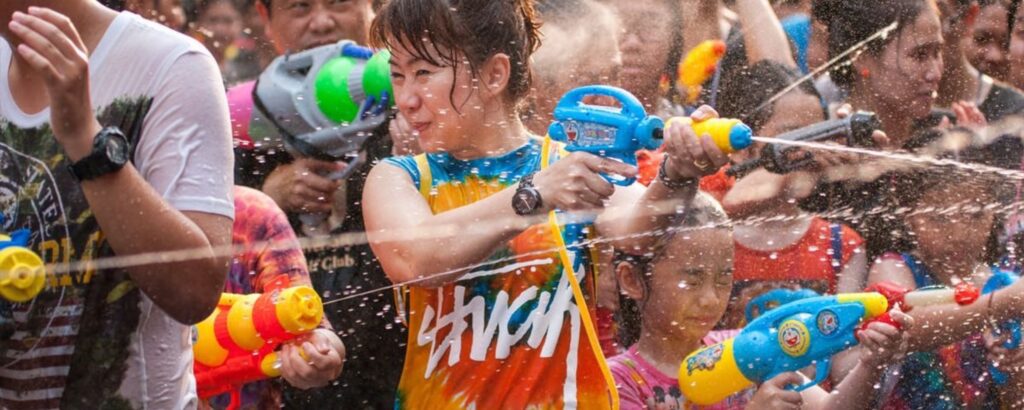
The city’s grand ceremonial boulevard hosts an official Songkran parade featuring traditional costumes, classical dancers, flower floats, and the kind of colour that photographs cannot fully capture. The parade is typically held on 13 April. Arrive early for pavement space and stay for the full procession – it takes time, and the later floats are often the most elaborate.
4. Eat your way through the street food that only appears at Songkran
Festival seasons pull out the street food vendors and Songkran is no exception. Look for khao chae – a dish of jasmine-water-soaked rice with intricate fried accompaniments, served cold, that exists almost exclusively during Songkran. It is delicate, slightly floral, and nothing like anything else you will eat in Thailand. Department store restaurants and some traditional shophouses prepare it for only a few weeks each year.
Beyond khao chae: mango sticky rice is everywhere and at its seasonal best in April. Som tam carts multiply. Cold Thai iced tea, drunk from a bag, becomes an act of survival on a 38-degree afternoon.
5. Take a Chao Phraya River boat away from the crowds
If the Silom intensity becomes too much, the river offers a different kind of festival. The Chao Phraya Express boats and tourist ferries run through Songkran, and some operators run special decorated boats with their own water-throwing celebrations. Being on the water gives you a cooler vantage point on the city, and the river crossings around Wat Arun are genuinely beautiful in the bright April light.
6. Experience Songkran at Khao San Road after dark
Khao San Road is a different beast entirely from Silom. Where Silom is mixed and locals-heavy, Khao San skews international backpacker, with DJ stages, neon colours, and water fights that run later into the night. It is chaotic in a way that is either perfect or too much, depending entirely on your disposition. If you have already had the Silom daytime experience, Khao San on the evening of the 13th or 14th adds a very different chapter.
7. Restore after the festival at Chandee Sleep Salon
Here is the thing nobody tells you about Songkran: festival water is not kind to your hair. A full day on Silom chlorinated garden-hose water, sun, heat, the general chaos of it – leaves your scalp parched and your hair somewhere between wild and defeated. This is, it turns out, the perfect moment for a head spa.
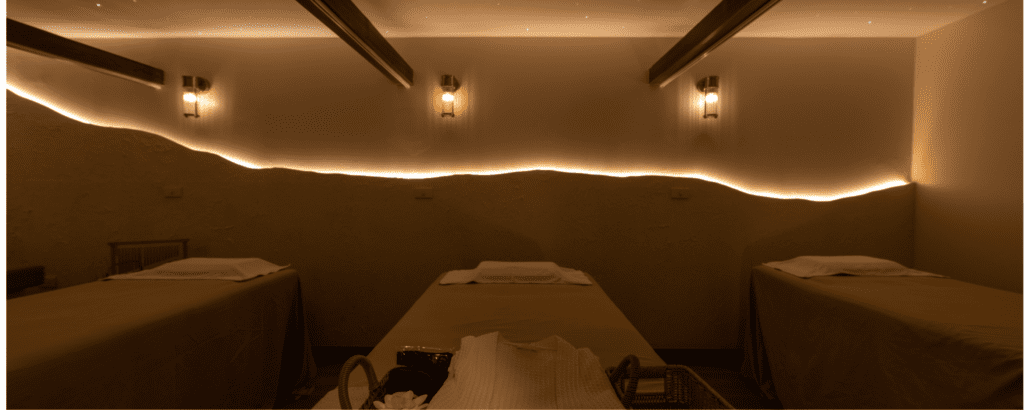
Chandee Sleep Salon & Massage, a five-minute walk from BTS Chong Nonsi, is Bangkok’s original Vietnamese Head Spa and Sleep Salon. Their signature 17-step Ring of Water ritual – which involves warm water, ASMR sounds, gentle scalp work, and an organic Yves Rocher hair wash – manages to feel both like a recovery treatment and a continuation of the festival’s relationship with water. You arrive damp and depleted. You leave restored.
Chandee is open until 11 PM every day, which makes it ideal for the long Songkran day: celebrate from noon, wind down as the evening quietens, and end the night under their hand-painted starry ceiling. Booking in advance during Songkran week is strongly recommended.
8. Explore the old city while it’s transformed
The historic districts around Rattanakosin Island take on a different quality during Songkran. Smaller neighbourhood celebrations often feel more intimate and genuinely communal than the tourist-heavy main streets. Wandering through Chinatown or the lanes around Tha Tien during the festival gives you a sense of how Bangkok’s different communities mark the occasion sometimes with elaborate merit-making ceremonies, sometimes with modest bucket-and-hose affairs between neighbours.
9. Go to a rooftop on the evening of 13 April
From above, Bangkok at Songkran is extraordinary. The city glitters, the streets are still humming with activity, and the perspective shift – from inside the crowds to above them – is a genuine moment of stillness in a busy day. Bangkok has no shortage of rooftop bars; the ones in the Silom and Sathorn areas put you directly above the festival’s heart. Vertigo at Banyan Tree and Sky Bar at Lebua are expensive but unambiguous in their views. For a lower-key option, many mid-range hotels in the area open their pools and rooftops during Songkran week.
10. Stay in Bangkok a day longer than you planned
This sounds like an obvious tip until you realise how many people leave on the 14th and miss the quiet 16th – when Bangkok slowly re-emerges, wipes itself dry, and returns to its everyday warmth. Markets reopen, locals are in unusually good spirits, and the city has a post-festival ease that is unlike any other day of the year. If your itinerary is even slightly flexible, staying one extra day is almost always the right decision.
What to bring (and what to leave at the hotel)
Songkran preparation is straightforward but non-negotiable. Wear synthetic or quick-dry clothing – cotton takes hours to dry and becomes miserable in the heat. Leave your phone in a waterproof pouch or a dry bag; the good camera stays at the hotel unless it has meaningful waterproofing. Cash in a zip-lock bag outperforms a wallet that will be soaked within minutes. Wear shoes you can walk in wet – sandals work, flip-flops less so on crowded pavement. Sunscreen goes on before you leave and, realistically, comes off almost immediately in the water fight; reapply at lunchtime if you can find a dry moment.
Hydration matters more than most visitors expect. The combination of 38-degree heat, sun exposure, and the physical energy of a crowd means that a litre of water by mid-afternoon is not excessive. Thai convenience stores are everywhere and fully stocked.

A note on Songkran and Thai culture
Songkran began as a deeply spiritual occasion – the ceremonial bathing of Buddha images, the pouring of scented water over the hands of elders as a sign of respect, and the making of merit at temples across the country. The water fight culture that international visitors now associate with it grew around these ceremonies rather than replacing them. In Bangkok’s older neighbourhoods and in temples throughout the city, the original rituals continue alongside the street celebrations.
If you engage with both sides of the festival – the joyful chaos and the quieter ceremony – you leave with a much richer understanding of what Thailand’s New Year actually means. The water is not just a party. It is a blessing.
Getting around Bangkok during Songkran
Road closures across central Bangkok during the peak days (13-15 April) make taxis and tuk-tuks significantly slower than usual. The BTS Skytrain remains the most reliable way to move between areas and is air-conditioned, which you will appreciate by mid-afternoon. The MRT is also fully operational. Plan your movements around BTS stations: Chong Nonsi and Sala Daeng for Silom, Siam for central Bangkok, Phrom Phong for Sukhumvit. Expect all stations to be busier than normal – build time into your plans.
Ready to plan your Songkran?
Bangkok does Songkran like nowhere else – it is bigger, louder, wetter, and more generous in spirit than you are prepared for. Come ready for it. Stay flexible. And when the day is done and the city quietens, find somewhere that knows how to help you properly rest.
Chandee is a short walk from the heart of Silom Road. Open until 11 PM through Songkran week. The water ritual starts where the festival ends.