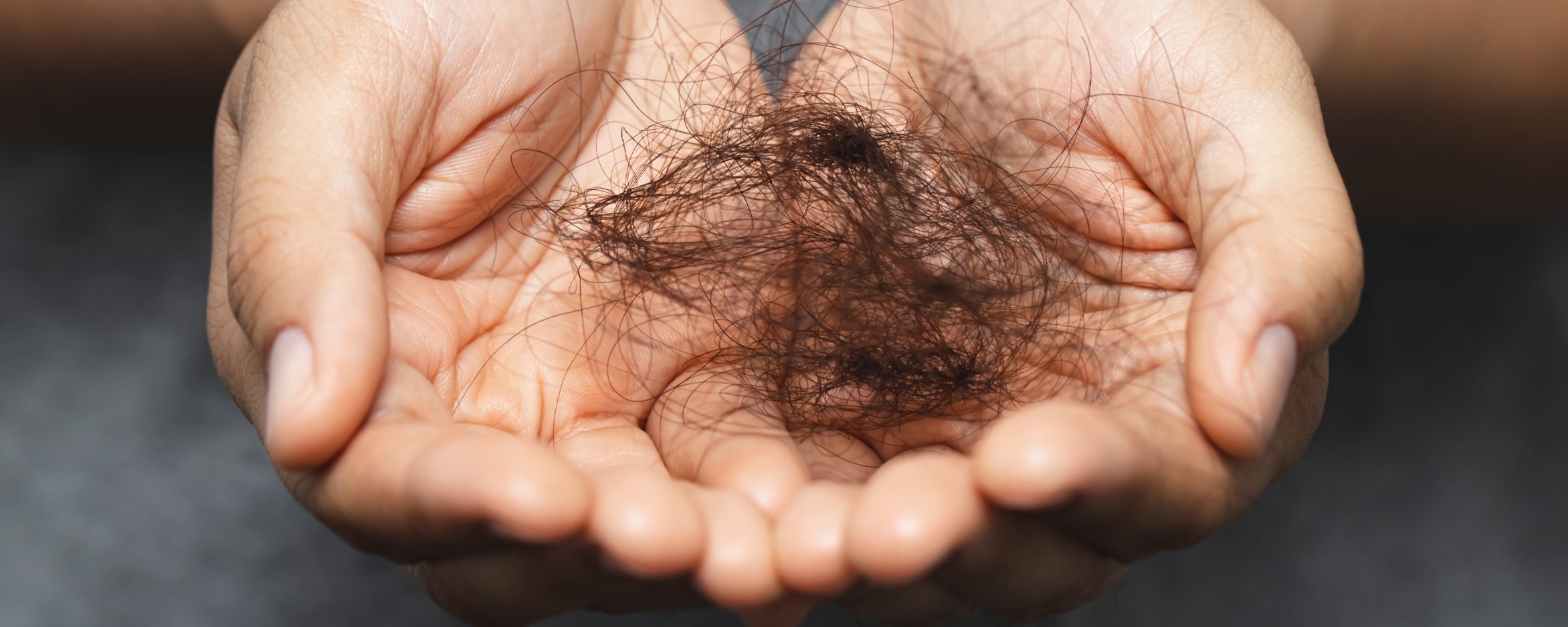
You didn’t imagine it. Your hair has changed since you arrived.
If you’ve spent more than a few weeks in Bangkok – as a tourist, an expat settling in, or a Thai local navigating one of the most intense urban environments in Southeast Asia – there’s a decent chance you’ve noticed something. More hair on the pillow. More hair in the shower drain. A texture that feels different. A scalp that itches, or flakes, or just feels… off.
You are not imagining it.
Bangkok is genuinely hard on hair. Not because of any single dramatic cause, but because of the accumulation of a dozen low-level stressors that most people never think to connect: the water you wash with, the air you breathe, the sun that hits your scalp at 13 degrees north latitude, the heat that doesn’t let up, and the particular kind of exhaustion that Bangkok seems to produce even in people who came here to relax. Understanding what’s actually happening and separating what you can change from what you can manage – is the first step toward hair that actually feels like yours again.
The Bangkok Water Problem Nobody Warns You About
Let’s start with the thing most people overlook entirely: the water.
Bangkok’s municipal water supply is classified as moderately hard water meaning it contains elevated concentrations of calcium and magnesium ions. For drinking, this is largely irrelevant. For your scalp and hair, it creates a slow and cumulative problem. Hard water minerals deposit on the hair shaft, making it rougher, duller, and more porous over time. They also leave residue on the scalp, interfering with the natural oil balance and – in susceptible individuals – contributing to the kind of low-grade irritation that accelerates shedding.
A 2016 study published in the International Journal of Trichology found measurable differences in hair tensile strength and elasticity between subjects exposed to hard water versus deionised water over just a 30-day period. The effects were more pronounced in hair that was already chemically processed or heat-treated.
Here’s the compounding factor: most people in Bangkok wash their hair more often than they do at home, because Bangkok is hot and humid and the idea of going a day without washing feels unpleasant. More washing with hard water means more mineral accumulation. More mineral accumulation means more scalp disruption. More scalp disruption means more shedding. It’s a cycle that’s easy to step into without realising it.
What genuinely helps here is a periodic deep scalp cleanse – the kind that removes mineral buildup and residue from the scalp surface without stripping the follicle of everything it needs. This is exactly what a properly structured professional head spa ritual is designed to do, and it’s one of the reasons regular visitors to Chandee often notice immediate changes in scalp feel after a single session.
The Heat Is Doing More Than Making You Sweat
Bangkok’s mean annual temperature hovers around 29 degrees Celsius, but the felt temperature factoring in humidity and the heat island effect of the city regularly tips past 40 degrees during the day. For hair and scalp, prolonged exposure to ambient heat has documented effects that go beyond simple discomfort.
Chronic heat stress has been linked to changes in sebaceous gland activity (the glands responsible for natural scalp oil production), shifts in the scalp microbiome, and in some individuals – a low-grade inflammatory state in the follicle environment that can contribute to premature entry into the resting (telogen) phase of the hair growth cycle. When more follicles rest simultaneously than usual, the result is what dermatologists call telogen effluvium: diffuse, generalised shedding across the scalp.
The Journal of Investigative Dermatology has published research showing that sustained elevated temperatures affect keratinocyte behaviour – the cells responsible for hair shaft production. This isn’t theoretical. Bangkok residents and long-stay tourists notice it in practice. The hair that was thick and manageable in a temperate climate starts to feel thinner, finer, and less cooperative within weeks of arrival.
This is not permanent damage, and it is not inevitable hair loss. But it is a real physiological response to a real environmental pressure and acknowledging it matters, because it means the solution isn’t a new shampoo. It’s addressing the scalp environment itself.
The UV Factor: When the Sun Gets Under Your Skin
Bangkok sits at latitude 13.75 degrees north. At that proximity to the equator, UV intensity is substantially higher than what most Western visitors and many expats – are accustomed to. This matters for hair in ways that aren’t always obvious.
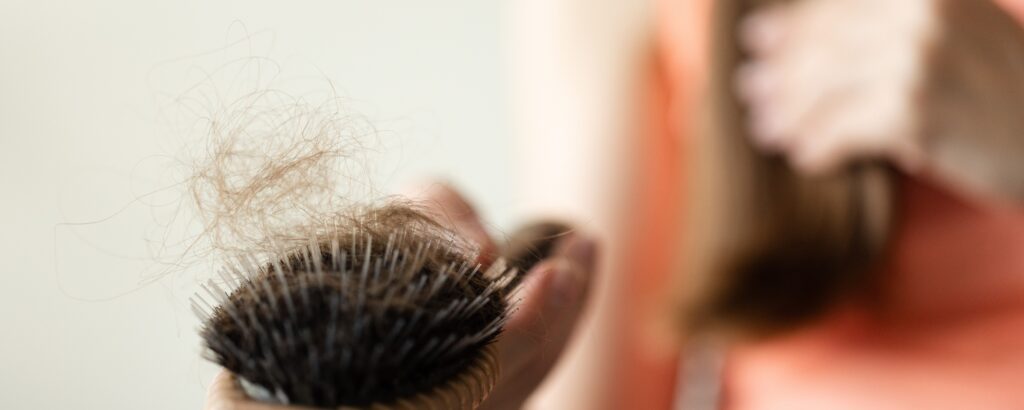
UV radiation degrades the protein structures within the hair shaft, particularly the disulphide bonds in keratin that give hair its tensile strength and elasticity. Research published in Photochemistry and Photobiology has documented oxidative damage to both the hair shaft and the scalp surface from cumulative UV exposure. The scalp often completely unprotected is particularly vulnerable: it receives direct vertical sun exposure for much of the day, and most people apply no sunscreen to it.
The result, over weeks and months, is hair that is structurally weaker, more prone to breakage, and in some cases a scalp that is chronically inflamed in ways that quietly interfere with the follicle cycle. The shedding you notice isn’t necessarily the UV damage itself it’s often the delayed response to follicle disruption that happened 8 to 12 weeks earlier.
A wide-brimmed hat is genuinely one of the most underrated hair care interventions in Bangkok. It also makes you look like you know what you’re doing, which is a bonus.
The Stress Variable (Which Bangkok Amplifies)
There’s an entire article on the MAYO clinic blog about the relationship between stress and hair loss and if you haven’t read it, it’s worth your time. The short version: elevated cortisol (the body’s primary stress hormone) pushes hair follicles prematurely into the resting phase, leading to diffuse shedding 2 to 3 months after the stressful period. This is called telogen effluvium, and it is one of the most common causes of sudden hair shedding in otherwise healthy adults.
What makes Bangkok relevant here is that it produces a particular kind of stress that many people underestimate: the productive, exciting, stimulating stress of navigating a new city, a new climate, a new diet, a new work environment, or the sensory overload of prolonged travel. This isn’t misery-stress. It can feel like adventure-stress. But the body’s cortisol response doesn’t particularly distinguish between the two.
Research from the Harvard Stem Cell Institute has shown that elevated corticosterone – the rodent equivalent of human cortisol – directly suppresses the stem cell populations responsible for hair follicle regeneration. The human data, while less controlled, points in the same direction: sustained stress disrupts the follicle cycle at a fundamental level.
The practical implication? Managing stress in Bangkok isn’t just about mental wellbeing. It’s scalp care. And scalp care, done properly, actively reduces stress – which is why the people who come in most regularly for head spa sessions at Chandee often describe a feedback loop they didn’t anticipate: they sleep better, they feel calmer, their scalp settles, and their hair gradually stabilises.
The Lifestyle Factors That Stack Up Quietly
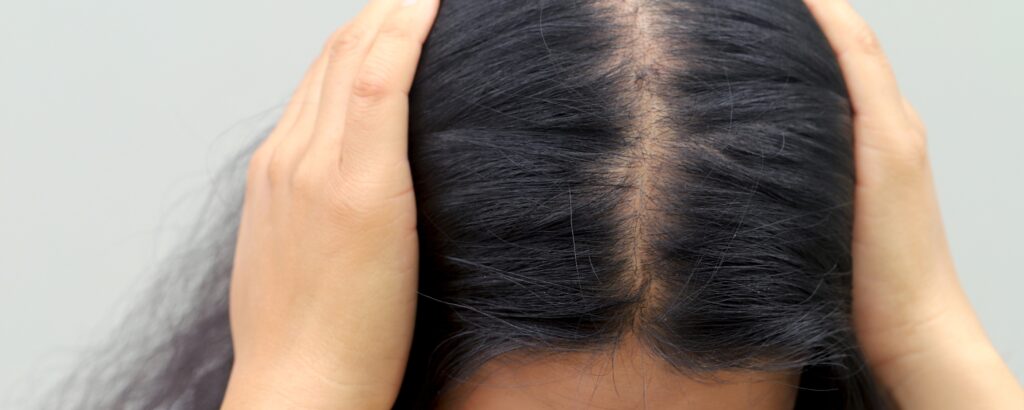
Beyond environment and stress, Bangkok has a handful of lifestyle patterns that tend to quietly accumulate into scalp and hair issues over time.
Diet transitions. Moving to Bangkok often means a significant shift in diet – more street food, different proteins, different vegetable profiles, often more sodium and less of certain micronutrients. Iron, zinc, biotin, and vitamin D are among the nutrients most commonly associated with hair shedding when they dip below optimal levels, and the disruption of a dietary pattern is one of the more underappreciated triggers for telogen effluvium. If you’ve significantly changed what you eat since arriving in Thailand, that is worth noting.
Sleep disruption. Bangkok doesn’t really encourage early nights. The city hums until late, the heat makes sleep harder, jet lag compounds things for tourists, and the general stimulation of urban Thai life isn’t particularly conducive to the deep, consistent sleep that the body (and the follicle cycle) needs to function properly. Sleep deprivation elevates cortisol. Elevated cortisol, as covered above, is not kind to hair.
Increased product use. In a hot, humid city, many people reach for dry shampoos, heavy conditioners, anti-frizz serums, and styling products they wouldn’t ordinarily use at home. Residue from these products accumulates on the scalp faster than in cooler climates, blocking follicles and creating an environment that isn’t ideal for hair growth. The products themselves aren’t necessarily the problem – the incomplete removal of them is.
Helmet-wearing. If you’re on a motorbike in Bangkok and many people are you’re wearing a helmet for extended periods in significant heat. The combination of friction, sweat, heat, and occlusion creates a scalp environment that can accelerate sebum oxidation and contribute to folliculitis in susceptible individuals. Wash your scalp properly after helmet use. This seems obvious but many people don’t do it.
What Actually Helps
There is no single answer here, because the causes are multiple and individual. But there are some things that consistently make a real difference for people dealing with hair and scalp changes in Bangkok – based on what we observe at Chandee, what the research supports, and what genuinely holds up over time.
A regular, professional scalp cleanse. A properly performed head spa session particularly one that includes warm water irrigation, scalp manipulation, and a deep cleanse with appropriate products removes the mineral buildup, oxidised sebum, and product residue that daily washing doesn’t address. Research published in PMC / ePlasty has shown that standardised scalp massage over a sustained period produced measurable increases in hair thickness – the mechanism being improved blood flow and mechanical stimulation of the follicle environment.
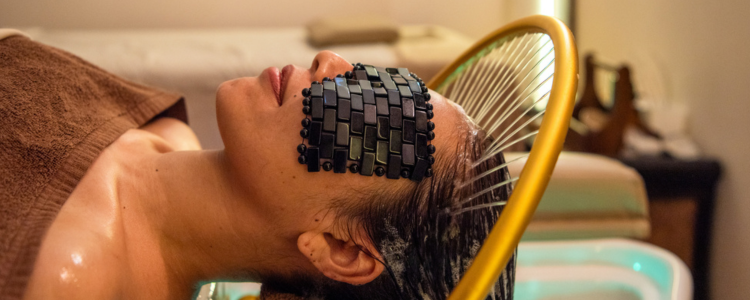
At Chandee, the 17-step Ring of Water ritual was built around exactly these principles. The water temperature, the sequence of scalp manipulation, the ASMR sound environment that helps lower cortisol before we’ve even touched your scalp – all of it is in service of creating the conditions in which the follicle environment can stabilise. Many guests come in initially for a one-off experience, and find themselves coming back regularly once they notice what changes.
Hydration that actually reaches the scalp. Drinking enough water in Bangkok heat is harder than it sounds – you lose it faster, you’re often moving, and the city doesn’t always make it easy to stay on top of it. Chronic mild dehydration affects scalp skin health in the same way it affects skin generally: slower cell turnover, impaired barrier function, reduced elasticity. This is low-tech advice, but it’s the kind that compounds positively over time.
Sunlight mitigation. A hat, or leave-in UV protection specifically designed for hair, is genuinely worth using in Bangkok. The structural damage from cumulative UV exposure is real, and unlike scalp-based issues, once the protein structures within the hair shaft are degraded, the solution is regrowth rather than repair.
Not over-washing. This counteracts the instinct that most people develop in Bangkok, but washing every day – especially with hard municipal water and whatever shampoo came with your hotel room – can strip the scalp of the oils it relies on to maintain its own microbiome and barrier function. Every other day, with a gentle, pH-balanced shampoo, is usually a better equilibrium. If you can use filtered water, even better.
Distinguishing between shedding and loss. This one matters, because the panic response to seeing more hair in the drain often leads people to take actions (more washing, more product, more manipulation) that make things worse. Most hair shedding in Bangkok – particularly in the first two to three months of arrival – is temporary and environmental. It takes time to manifest after the trigger event (often 8 to 12 weeks), and it takes time to resolve after the environment stabilises. Patience, and addressing root causes rather than symptoms, is usually the right move.
When to Take It More Seriously
Not all hair loss is environmental and reversible. If you’re noticing patterned loss (receding hairline, thinning crown) rather than diffuse shedding, if the shedding is accompanied by scalp pain, burning, or visible inflammation, or if it persists beyond six months without stabilising, those are signals to consult a dermatologist rather than a spa. Conditions like androgenic alopecia, alopecia areata, and fungal scalp infections require medical diagnosis and management – and are beyond what any wellness ritual can address.
What a head spa can genuinely support is the scalp environment that surrounds those conditions: reducing inflammation, improving circulation, removing buildup, and creating the conditions in which a follicle in good health can do what it’s designed to do. That’s a meaningful contribution. It’s just not a cure for everything, and we’d rather be honest about that.
Regular scalp treatments are one of the most consistent recommendations for Bangkok-related hair loss. Read what guests say about the results in our guide to the best head spa in Bangkok. Chandee’s head spa treatments include a dedicated scalp detox and exfoliation step specifically designed to remove the buildup caused by Bangkok’s hard water and pollution.
A Final Word on Doing Something About It
Bangkok does a lot of things to hair that Bangkok doesn’t get enough credit for. But it’s also a city with an extraordinary concentration of wellness knowledge – Thai massage traditions that have been refined over centuries, Vietnamese head spa techniques that were built precisely around scalp health, and practitioners who understand what heat, humidity, and hard water do to a scalp in a way that most spas in cooler climates simply don’t.
If you’re in Silom or near BTS Phrom Phong and you’ve been quietly watching the drain, it might be worth doing something intentional about it. Our head spa and hair spa packages are a reasonable starting point – not because a single session will reverse weeks of environmental accumulation, but because it gives your scalp a proper reset and gives you a clearer baseline to work from.
The 17 steps of the Ring of Water ritual are not glamorous marketing language. They’re a sequence developed to do specific things to a scalp under pressure. There are reasons every step is in the order it’s in. And there’s a reason that guests who come in saying “my hair has been terrible since I got to Bangkok” tend to leave looking and feeling measurably different.
Reserve your session at Chandee Silom or Sukhumvit 39. Or read the FAQ if you’ve never had a head spa before and aren’t sure where to start. Either way your scalp is worth paying attention to.